Polyphenols in chocolate
What’s behind these plant compounds?
Text:
Katharina Kuhlmann
Photography:
© EcoFinia GmbH
12 October 2026
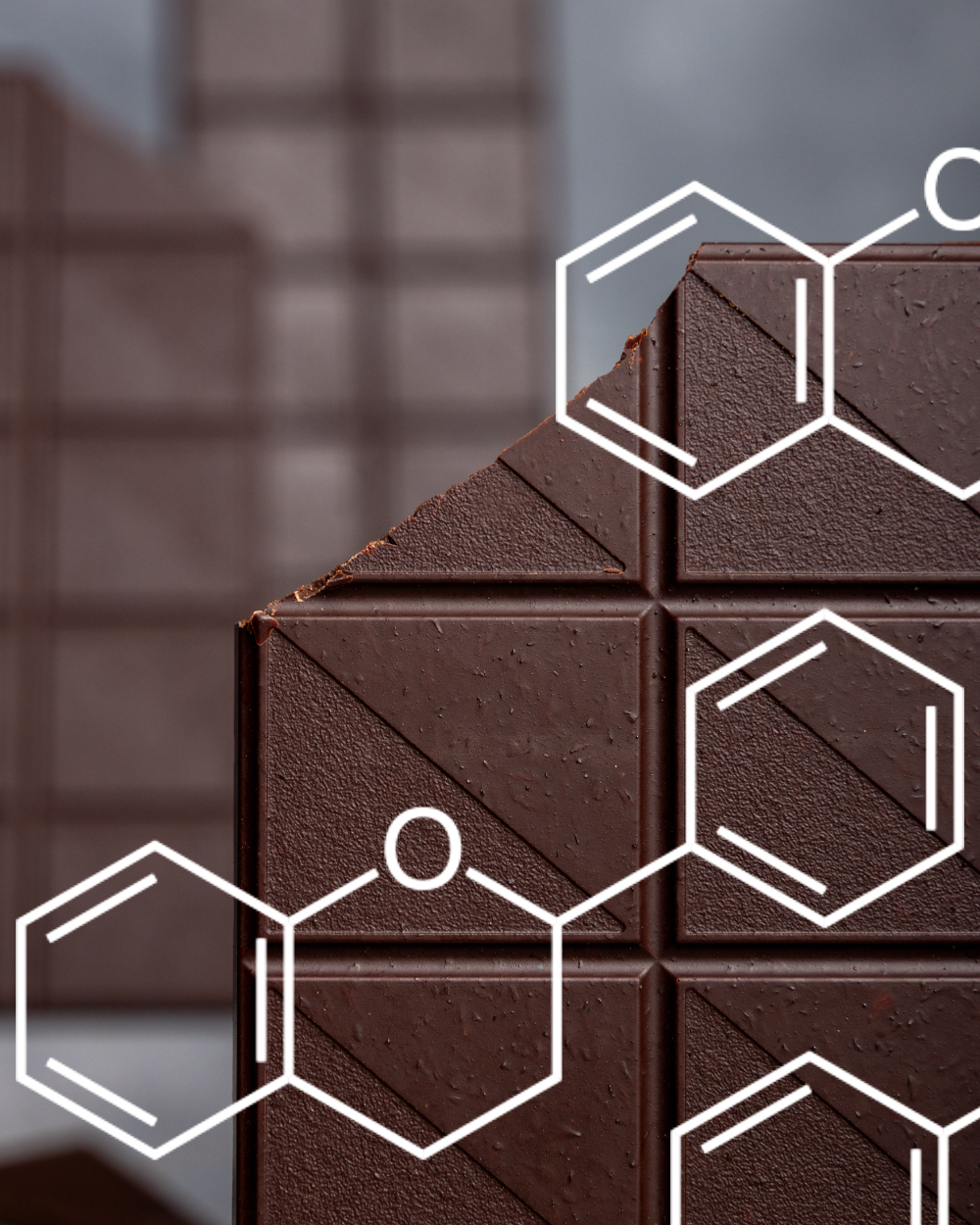
Cocoa is one of the foods that are naturally rich in polyphenols. But what exactly are polyphenols? And what does science say about how they work in the human body and their potential health benefits? Which polyphenols are found in cocoa, and how does the processing journey – from the cocoa bean to the finished chocolate – affect these phytochemicals?
Anyone looking into the ingredients of cocoa will soon come across a rather scientific-sounding term: polyphenols. With around 10,000 known compounds, this is a very large group of natural plant compounds.
Of course, polyphenols are not found exclusively in cocoa. Berries, tea, spices and many other plant-based foods also contain these interesting compounds. However, cocoa occupies a special place in this regard, as scientific analyses have shown it to be a food particularly rich in polyphenols.
What are polyphenols?
Polyphenols belong to the group of substances known as secondary plant compounds. Their name is derived from their chemical structure (“compound with many phenolic rings”). This exceptionally large and diverse group of compounds is, in turn, divided into various sub-groups depending on their structure.
Unlike carbohydrates, proteins or fats, for example, polyphenols are not immediately essential for the plant’s survival. However, they fulfil numerous other functions. For instance, they can help plants protect themselves against predators or pathogens. Others, in turn, play a role in attracting insects, providing protection against UV radiation or contributing to the mechanical stability of plants.
Which foods are particularly rich in polyphenols?
1. Cloves: 15,188 mg/100 g
2. Dried peppermint: 11,960 mg/100 g
3. Star anise: 5,460 mg/100 g
4. Cocoa powder: 3,448 mg/100 g
5. Dried Mexican oregano: 2,319 mg/100 g
6. Celery seeds: 2,094 mg/100 g
7. Aronia berries: 1,756 mg/100 g
8. Dark chocolate: 1,664 mg/100 g
9. Linseed flour: 1,528 mg/100 g
10. Black elderberries: 1,359 mg/100 g
Good to know:
• The ranking is based on a scientific analysis of the Phenol-Explorer database. Data on 502 individual polyphenols in a total of 452 foods were analysed.
• The values refer to 100 g of the respective food and should therefore not be equated with the actual amount consumed, as, for example, spices and herbs are only consumed in relatively small quantities.
• The polyphenol content can vary depending on the variety, cultivation, degree of ripeness and processing. The list therefore shows how rich in polyphenols a foodstuff can potentially be, but not how many polyphenols we actually consume from it when we eat it.
How do polyphenols act in the human body?
To answer the question straight away: despite years of intensive research, many of the mechanisms by which polyphenols act in the human body have not yet been sufficiently investigated. The antioxidant properties of polyphenols, for example, have been well studied. “Antioxidant” essentially means that a substance can be involved in chemical reactions with so-called free radicals. However, it cannot automatically be concluded from this that a diet rich in polyphenols can prevent certain diseases or even cure them.
In addition to their antioxidant properties, research is currently focusing in particular on the influence of polyphenols on the cardiovascular system and on inflammatory processes in the body.
Scientific research in this area is not always straightforward, as the absorption and metabolism of polyphenols in the human body are highly complex processes. Not all substances are absorbed and metabolised in the same way, nor do they all enter the bloodstream in their entirety. Consequently, results from laboratory studies cannot simply be extrapolated to the effects of a particular food on the human body. However, as far as our diet is concerned, it is worth noting that polyphenols are found in numerous plant-based foods, which is why a varied plant-based diet provides a wide variety of these substances.
Which polyphenols are found in cocoa?
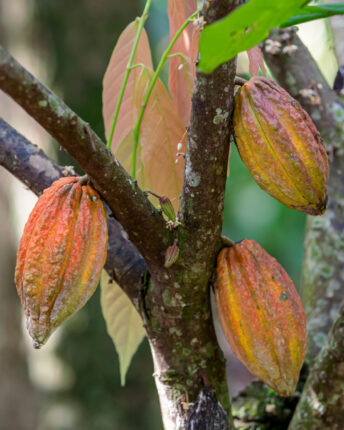
Cocoa contains many different polyphenols. These are found, amongst other places, in specialised storage cells within the tissue of cocoa beans. The flavonoid group, in particular, is significant in cocoa. This group includes, for example, catechins, anthocyanins and procyanidins, which are present in varying quantities.
Polyphenols in cocoa are not only of interest from a nutritional perspective. They also have very specific effects on our perception of the food. For instance, they influence both the colour of cocoa and cocoa-containing products, as well as their characteristic astringent flavour.
What is the polyphenol content of chocolate?
It is not generally true to say that chocolate with a higher cocoa content also contains more polyphenols. The reasons for this start with the cocoa bean itself. Depending on the variety and origin, the original polyphenol content can vary considerably.
During processing, many factors are added which influence the polyphenol content of the cocoa and, ultimately, of the chocolate. Fermentation, in particular, plays a key role. It is an essential step in the development of the cocoa’s eventual flavour, but at the same time it alters the chemical composition of the bean. Thus, beans that have undergone short fermentation have a significantly higher polyphenol content than those that have undergone long fermentation. The reason for this is that, during prolonged fermentation, polyphenols are increasingly altered or degraded.
Roasting also has a decisive influence on the polyphenol content of the cocoa bean. Depending on the method used, around 10 to 40 per cent of the original polyphenol content may be lost. Alkalisation of the cocoa can also have a particularly significant effect. This process, which is used primarily in the production of cocoa powder, alters, amongst other things, the colour and flavour of the cocoa. In the process, up to 90 per cent of the polyphenols originally present can be degraded.
Therefore it is clear that the variety of cocoa, its origin, fermentation and subsequent processing all have a significant influence on the polyphenol content of a chocolate. Each product must therefore be considered on its own merits; its polyphenol content cannot be extrapolated to similar chocolates based solely on their cocoa content.
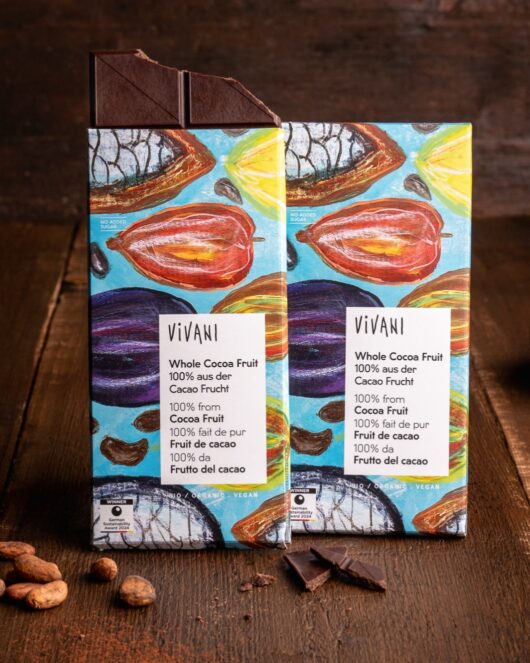
Latest analysis results for some of our VIVANI chocolates
The results are based on 100 g of chocolate in each case:
Fine Dark Date Sugar 80% Cocoa: 398 mg
Whole Cocoa Fruit – 100% From Cocoa Fruit: 1221 mg
Superior Dark Chocolate 100% + Cocoa Nibs: 506 mg
Fine Dark 92% Cocoa: 380 mg
Fine Dark Orange 70% Cocoa: 316 mg
Good to know:
The polyphenol content of chocolate can vary even within the same product. Depending on the growing conditions, degree of ripeness and processing of the cocoa beans, fluctuations may occur between different production batches.
List of references:
• https://www.lci-koeln.de/deutsch/veroeffentlichungen/lci-focus/kakao-und-polyphenole
• https://www.theobroma-cacao.de/wissen/gesundheit/polyphenole
• info box: Pérez-Jiménez J. et al., „Identification of the 100 richest dietary sources of polyphenols: an application of the Phenol-Explorer database“, European Journal of Clinical Nutrition (2010).
Verwandte Artikel
The Chocolate Journal