

“Learning for life“
at the Ecole Amitié
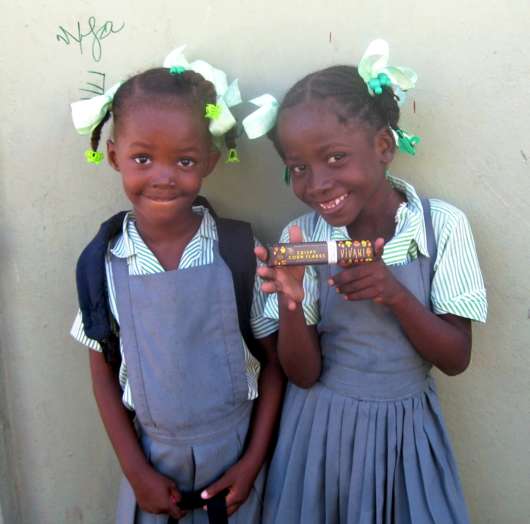
The “School of Friendship” is a primary school for children from the poorest backgrounds and for so-called Restaveks in the Haitian seaport Cap Haïtien.
Restaveks are children (often from the countryside) who cannot be fed by their own parents and are therefore given to relatives or host families in the bigger cities. In this situation, these children are often tasked with housework or other strenuous jobs. Typically, they do not receive any money for their work but are rather compensated with a temporary sleeping arrangement and what little food the families decide to leave for them. It is a modern-day form of slavery. Host families are expected to send the Restavek children to school for half a day but this is often not the case, especially when school fees are charged.
Learning for Life
The Ecole Amitié Project in Cap Haïtien
www.ecoleamitie.com
The Ecole Amitié opened in 1996 in a poverty-stricken district of Cap Haitian, located in the northeast of Haiti. This school has remained open for over 30 years despite constant political turmoil, natural disasters, and numerous other difficulties. Still to this day, its courageous founders still fight for survival and overall improvement of the school. The creator and founder of the project, a Haitian teacher by the name of Pierre Wallace passed away in 2005. His successor Joel Ambroise along with German painterLaetitia Schütt, (who live in Cap Haitien) her sister Cornelia, and a volunteer by the name of Regina Matt (who is responsible for collecting donations for the school throughout Germany) are still there today with unwavering commitment
The school has become an established social pillar in the village by providing access to basic education for around 400 children every year. The school program offers two pre-school years, after which children are taught from the 1stthrough 6thgrade. The school offers education in reading and writing, (In Haitian Creole and French) basics of mathematics, and some other basic general knowledge. In addition to the school lessons the children also have the opportunity to take part in some leisurely activities, which are usually accepted with a lot of enthusiasm. Even a nowadays very successful judo club has been founded within the school.
There is also a school for sewing that can show older students the way to a self-determined future and work with pay. School uniforms and student’s personal clothes are tailored at a reasonably low price and bring a sense of pride and happiness to the creators. The experience gained from this also increases career prospects for the seamstresses and sewers.
Another part of the school program is to strengthen the children’s self-confidence and to inform them about their own rights. Since Restavek children are often exploited by their host families, and experience violence and abuse strengthening the children’s identity is particularly important. It also allows the children to see a positive outlook on their future. Under normal circumstances these optimistic opportunities are not possible for the children, which makes the Restavek situation a major problem in Haiti.
A tough everyday life
...with unexpected setbacks
The 30th anniversary of Ecole Amitié is (unfortunately) not creating a festive atmosphere at the school at the moment, as the country is once again gripped by political turmoil, triggered by the repeated postponement of the presidential election.
These are also difficult years for Ecole Amitié financially, as, in addition to a shortage of donations, the school has been hit several times by destructive storms and floods. These occur frequently in Haiti and repeatedly cause setbacks due to damage to the infrastructure, for which valuable donations must be spent. These funds are then lacking elsewhere. Government funding is frequently withdrawn, which is why the school relies heavily on the support of volunteers and teachers sometimes have to wait longer for their already modest salaries.
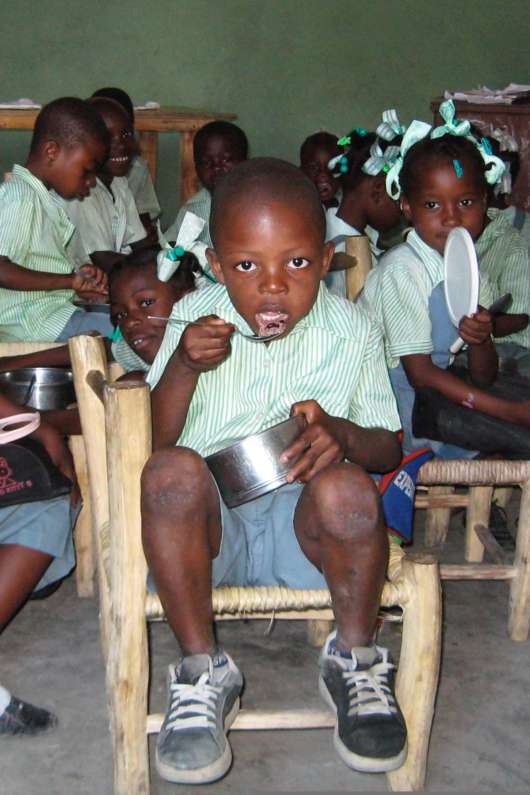
It is encouraging that the school continues to receive food supplies from the WFP (World Food Programme), which provides the vital school meals. For some children, these school meals are currently the only reliable meal of the day. They also serve as an important incentive for the restavek host families to send these children to school in the first place.
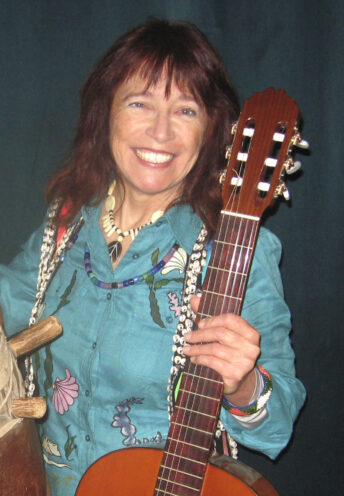
Through a personal connection with the Haitian singer TiCorn (“petite Cornelia” Schütt is of German descent), we became aware of the exemplary work carried out by the Ecole Amitie and would now like to contribute to its continued existence.
In addition to her numerous music albums, a Creole songbook featuring her compositions was published in 2019 as part of the “Chansons d’Haiti – TiCorn” series. This project to preserve Haitian song heritage, which is distributed free of charge to schools throughout Haiti, also received support from VIVANI.
“TiMoun Solèy” (Children of the Sun) is already one of the most popular Creole children’s songs.